
introduction
classification of feedstuffs complete guide with types and example is a topic in which we will study about the systematic grouping of animal feeds based on their nutrient composition, fiber content, origin, and physical characteristics.
Thank you for reading. Don't forget to subscribe & share!
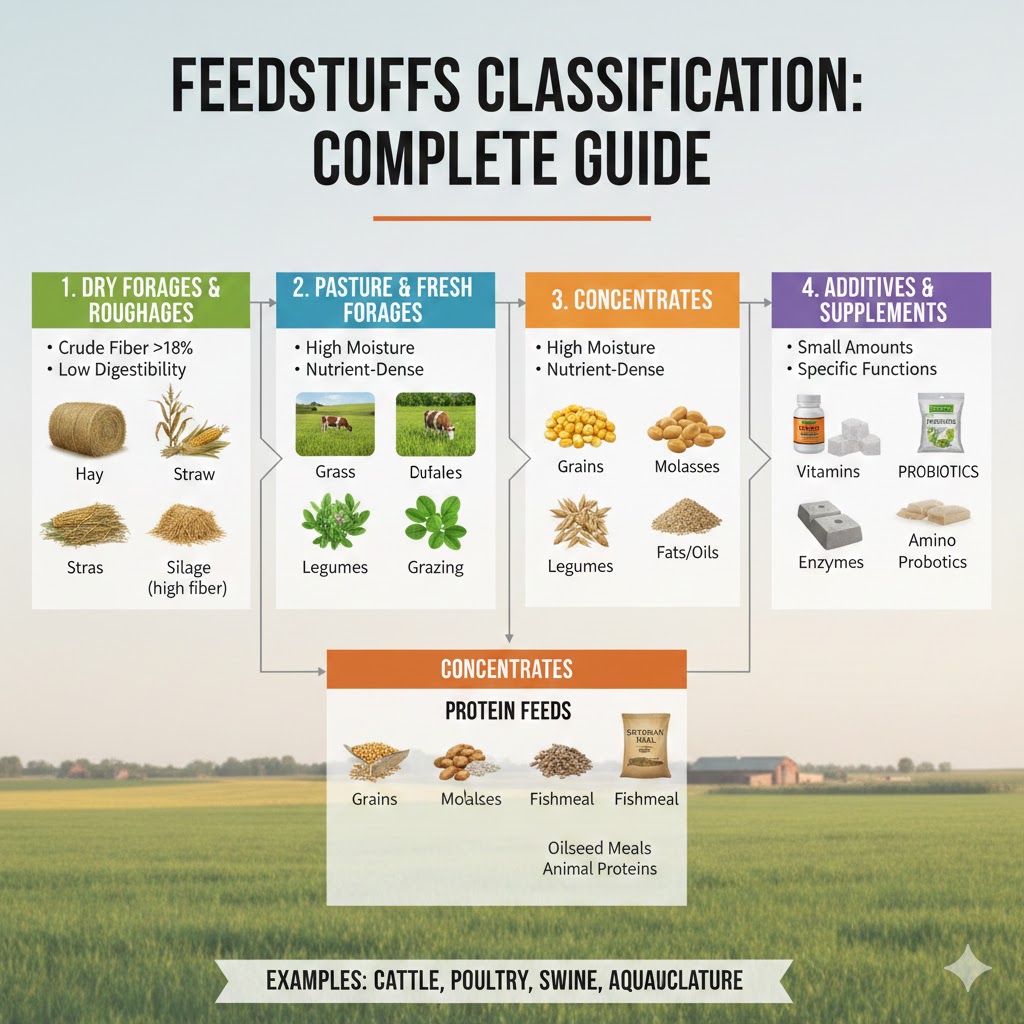
This classification helps nutritionists, veterinarians, and farmers formulate balanced rations, reduce feeding costs, and improve animal productivity. In animal nutrition, proper classification of feedstuffs is essential for efficient livestock and poultry production.
What Are Feedstuffs?
Feedstuffs are raw materials or ingredients used in the formulation of animal diets. They supply essential nutrients such as energy, protein, minerals, vitamins, and fiber required for growth, reproduction, and maintenance.
Feedstuffs Include:
- Grains and cereals
- Forages and fodders
- Oilseed meals
- Animal by-products
- Mineral and vitamin supplements
Feedstuffs differ from compound feeds, which are prepared mixtures of multiple feed ingredients.
Why Classification of Feedstuffs Is Important
The classification of feedstuffs plays a key role in animal nutrition for several reasons:
- Helps in balanced ration formulation
- Improves nutrient utilization
- Reduces feeding costs
- Prevents nutritional deficiencies
- Assists in quality control of feeds
- Supports sustainable livestock production
Proper classification ensures animals receive the right nutrients in the correct proportions.
Major Classification of Feedstuffs
Feedstuffs can be classified using different criteria. The most widely accepted and practical classification is based on fiber content, nutrient composition, origin, and physical form.
Classification of Feedstuffs Based on Fiber Content
Roughages
Roughages are feedstuffs that contain high crude fiber (more than 18%) and are generally low in energy. They are bulky and essential for proper rumen function in ruminants.
Characteristics of Roughages:
- High fiber content
- Low digestible energy
- Promote rumination and saliva production
Dry Roughages
Dry roughages have low moisture content and are mainly used during fodder scarcity.
Examples:
- Hay
- Straw
- Stover
Green Roughages
Green roughages are fresh, succulent feeds rich in vitamins and minerals.
Examples:
- Pasture grasses
- Leguminous fodders (alfalfa, clover)
- Green fodder crops (maize, sorghum)
Concentrates
Concentrates are feedstuffs with low fiber (less than 18%) and high nutrient density. They provide energy or protein in concentrated form.
Characteristics of Concentrates:
- Highly digestible
- Rich in energy or protein
- Low bulk
Energy Concentrates
Energy concentrates are rich in carbohydrates or fats and low in protein.
Examples:
- Maize
- Wheat
- Barley
- Molasses
Protein Concentrates
Protein concentrates contain more than 20% crude protein.
Examples:
- Soybean meal
- Cottonseed cake
- Groundnut cake
- Fish meal
Classification of Feedstuffs Based on Nutrient Content
Energy Feeds
These feeds supply carbohydrates and fats needed for body maintenance and production.
Examples:
- Cereal grains
- Molasses
- Fats and oils
Protein Feeds
Protein feeds support growth, milk production, and tissue repair.
Examples:
- Oilseed meals
- Animal protein meals
- Legume grains
Mineral Feeds
Mineral feedstuffs supply essential macro and micro minerals.
Examples:
Vitamin Feeds
Vitamin feedstuffs provide fat-soluble and water-soluble vitamins.
Examples:
- Vitamin premixes
- Green fodders
- Fish liver oil
Classification of Feedstuffs Based on Origin
Plant-Origin Feedstuffs
These are derived from plants and form the bulk of animal diets.
Examples:
- Cereal grains
- Oilseed cakes
- Forages
Animal-Origin Feedstuffs
Animal-origin feedstuffs are rich in high-quality protein and minerals.
Examples:
- Fish meal
- Meat and bone meal
- Blood meal
Industrial By-Products
These are by-products of agro-industrial processes and are economical feed sources.
Examples:
- Rice bran
- Wheat bran
- Brewery waste
- Molasses
Classification of Feedstuffs Based on Physical Form
Dry Feedstuffs
- Long shelf life
- Easy to store and transport
Examples: grains, meals, hay
Wet Feedstuffs
- High moisture content
- Spoil easily
Examples: silage, fresh fodder
Pelleted and Processed Feedstuffs
- Improved palatability
- Reduced feed wastage
Examples: pelleted feeds, crumbles
Classification of Feedstuffs for Different Animals
Ruminants
- Roughages + concentrates
- Efficient fiber utilization
Poultry
- Energy- and protein-rich concentrates
- Minimal fiber
Swine
- Highly digestible feeds
- Balanced energy and protein
Aquaculture
- High-protein, water-stable feeds
Examples of Common Feedstuffs Used in Animal Nutrition
| Category | Feedstuff | Main Nutrient |
|---|---|---|
| Roughage | Hay | Fiber |
| Energy Concentrate | Maize | Carbohydrates |
| Protein Concentrate | Soybean meal | Protein |
| Mineral Feed | Limestone | Calcium |
| Vitamin Feed | Premix | Vitamins |
Common Mistakes in Classification of Feedstuffs
- Confusing roughages with concentrates
- Ignoring anti-nutritional factors
- Overfeeding protein concentrates
- Improper storage leading to nutrient loss
Avoiding these mistakes improves feed efficiency and animal .
Conclusion
The classification of feedstuffs is a fundamental concept in animal nutrition that ensures efficient feeding, improved productivity, and better animal health. Understanding the different types of feedstuffs helps farmers, students, and professionals make informed feeding decisions and optimize livestock production.