
Introduction
What Are Roughages and Concentrates?
Roughages and concentrates are feedstuffs that supply nutrients required for animal maintenance, growth, reproduction, and production here is Roughages and Concentrates: Complete Guide About Everythings
Thank you for reading. Don't forget to subscribe & share!
- Roughages are bulky feeds rich in fiber and low in energy
- Concentrates are nutrient-dense feeds low in fiber but rich in energy or protein
Both are essential components of animal diets and must be used in proper proportions.
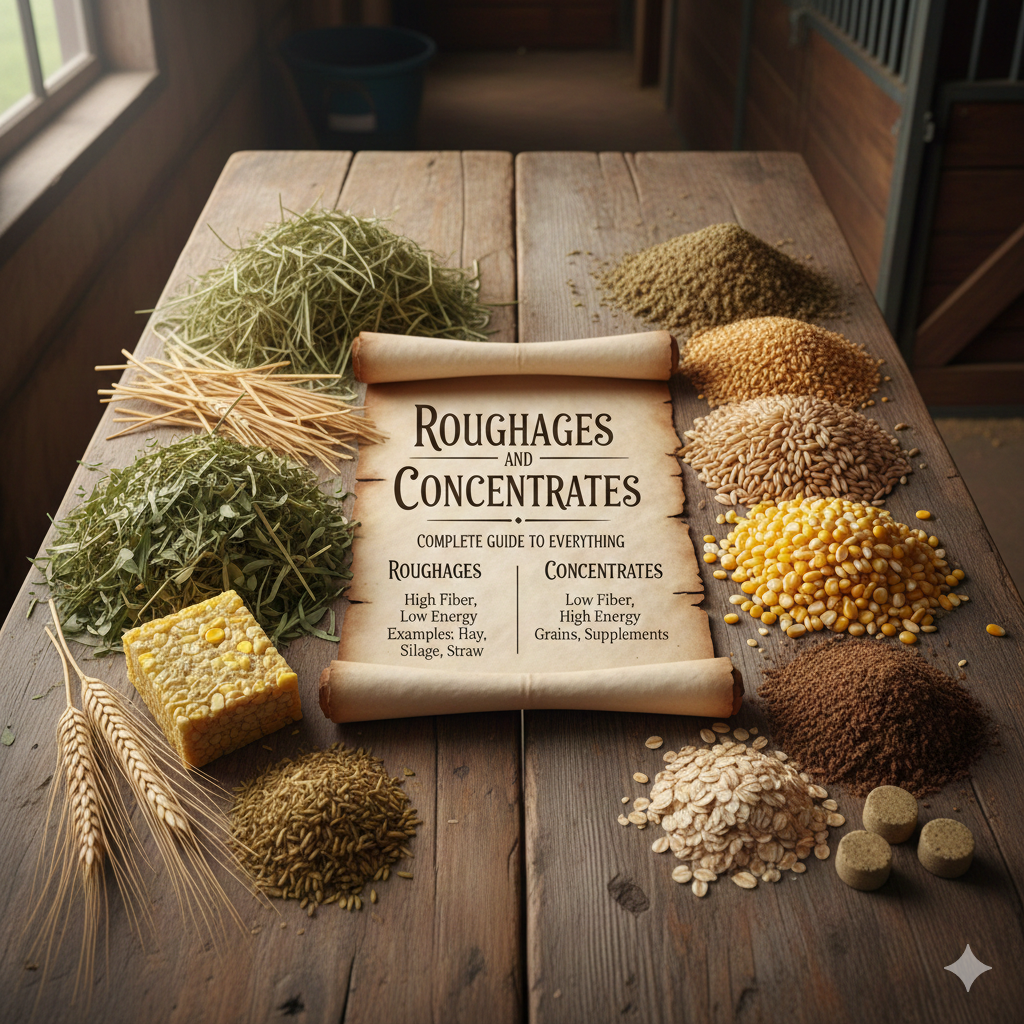
1Roughages and Concentrates: Complete Guide About Everythings
Importance of Roughages and Concentrates in Animal Nutrition
The correct use of roughages and concentrates plays a vital role in efficient livestock feeding:
- Maintains digestive health, especially in ruminants
- Improves feed efficiency and nutrient utilization
- Supports milk, meat, and egg production
- Prevents digestive disorders like acidosis
- Reduces overall feeding costs
A balanced combination of roughages and concentrates ensures optimal animal performance.
Roughages
Definition of Roughages
Roughages are animal feeds containing more than 18% crude fiber and relatively low digestible energy.
Characteristics of Roughages
- High crude fiber content
- Bulky and less digestible
- Low energy value
- Essential for rumination and saliva production
- Maintain rumen health in ruminants
Types of Roughages
Dry Roughages
Dry roughages contain low moisture and are commonly used during fodder shortages.
Examples:
- Hay
- Straw
- Stover
Green Roughages
Green roughages are fresh, succulent feeds rich in vitamins and minerals.
Examples:
- Pasture grasses
- Leguminous fodders (alfalfa, clover)
- Green fodder crops (maize, sorghum)
Succulent Roughages
Succulent roughages have high moisture content and are highly palatable.
Examples:
- Silage
- Root crops (beet, turnip)
Concentrates
Definition of Concentrates
Concentrates are feedstuffs containing less than 18% crude fiber and a high concentration of digestible nutrients.
Characteristics of Concentrates
- High nutrient density
- Highly digestible
- Rich in energy or protein
- Low bulk compared to roughages
Types of Concentrates
Energy Concentrates
Energy concentrates are rich in carbohydrates or fats and supply energy for production.
Examples:
- Maize
- Wheat
- Barley
- Molasses
Protein Concentrates
Protein concentrates contain more than 20% crude protein and support growth and production.
Examples:
- Soybean meal
- Cottonseed cake
- Groundnut cake
- Fish meal
Difference Between Roughages and Concentrates
Understanding the difference between roughages and concentrates is critical for proper feeding management.
| Feature | Roughages | Concentrates |
|---|---|---|
| Crude fiber | High (>18%) | Low (<18%) |
| Nutrient density | Low | High |
| Bulk | Bulky | Compact |
| Digestibility | Low to moderate | High |
| Examples | Hay, straw, fodder | Grains, oil cakes |
| Main role | Rumen health | Production and growth |
This comparison is one of the most important concepts in animal nutrition.
Examples of Roughages and Concentrates Commonly Used
Roughages
- Hay
- Straw
- Pasture grasses
- Silage
Concentrates
- Maize
- Wheat bran
- Soybean meal
- Fish meal
Role of Roughages and Concentrates in Different Animals
Ruminants
Ruminants such as cattle and sheep require large amounts of roughages for proper rumen function, supplemented with concentrates for production.
Poultry
Poultry diets rely mainly on concentrates, with minimal roughages due to limited fiber digestion.
Swine
Swine require highly digestible concentrates, with limited roughage inclusion.
Common Feeding Mistakes
Improper use of roughages and concentrates can lead to health and production problems.
- Excessive concentrate feeding causing acidosis
- Insufficient roughage leading to poor rumen function
- Use of low-quality or moldy feeds
- Ignoring fiber requirements
Avoiding these mistakes improves feed efficiency and animal health.
Conclusion
Roughages and concentrates form the foundation of animal nutrition. Roughages maintain digestive health, while concentrates supply essential nutrients for growth and production. Understanding their differences, types, and proper use is crucial for balanced feeding, improved productivity, and sustainable livestock management.
.