I. Introduction
Dairy Cattle Nutrition: Boosting Milk Production and Quality If you’re raising dairy cattle, you already know that nutrition is not just about keeping them alive—it’s about maximizing milk yield, improving milk quality, and ensuring animal health. Proper dairy cattle nutrition is the foundation of a profitable dairy farm.
Thank you for reading. Don't forget to subscribe & share!
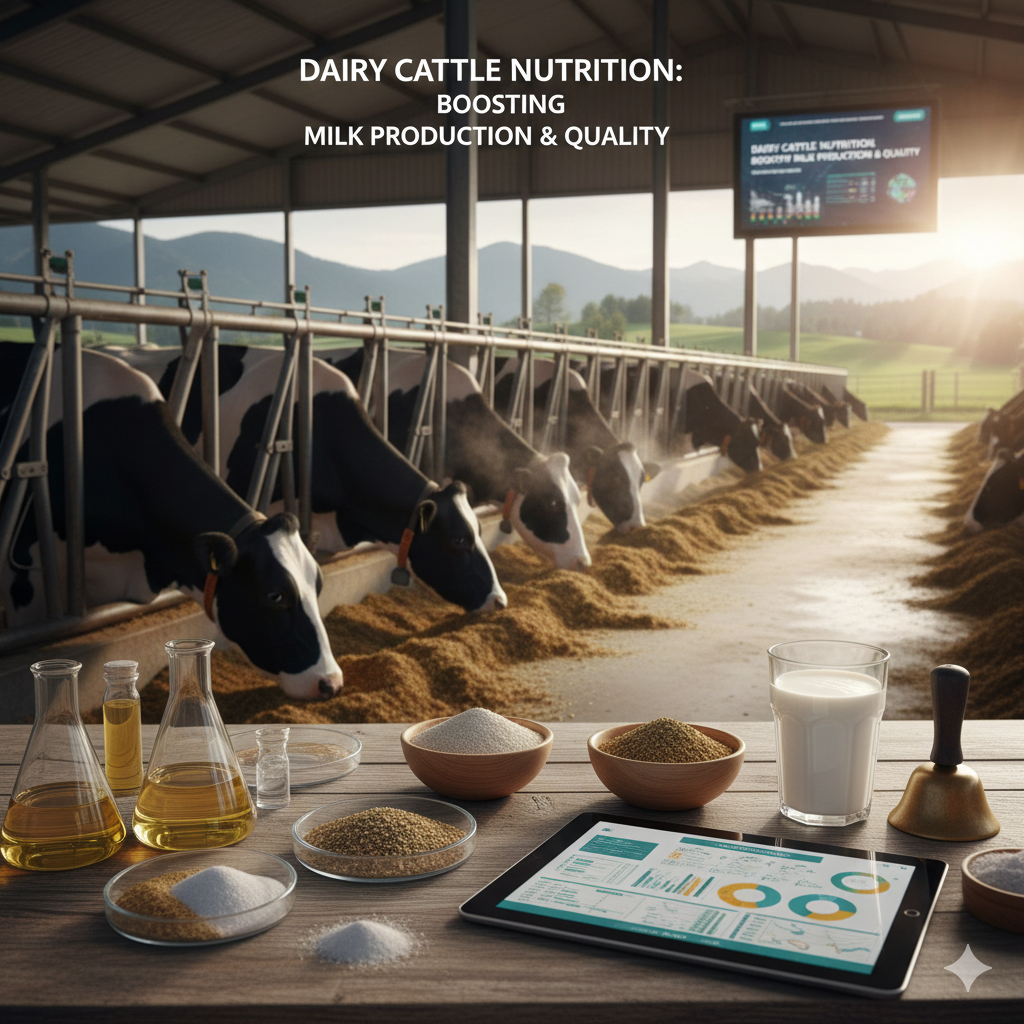
Dairy Cattle Nutrition: Boosting Milk Production and Quality
Whether you’re a farmer, veterinarian, or student, understanding the nutrient requirements, feeding strategies, and ration formulation is crucial. In this guide, we’ll break down everything you need to know to boost milk production and quality in your herd.
II. Understanding Nutrient Requirements for Dairy Cows
Cows require a balanced diet to produce milk efficiently. Let’s break down the essential nutrients:
A. Protein
Protein is vital for milk protein synthesis, growth, and reproduction. A deficiency can lead to lower milk yield and reproductive issues.
- Best sources: Soybean meal, cottonseed meal, legumes
- Tip: Adjust protein based on lactation stage and milk production levels
B. Energy (Carbohydrates & Fats)
Energy is crucial for maintenance, growth, and milk production. Carbohydrates provide the bulk of energy, while fats are a concentrated energy source that also enhance milk fat content.
- High-energy grains: Corn, barley, oats
- Fats: Vegetable oils, oilseed meals
- Tip: Avoid overfeeding energy to prevent acidosis
C. Vitamins and Minerals
Vitamins and minerals are essential for immune function, bone health, reproduction, and milk quality.
- Vitamins: A, D, E
- Minerals: Calcium, Phosphorus, Magnesium, Selenium
- Tip: Use mineral supplements to prevent deficiencies, especially during peak lactation
III. Types of Feed for Dairy Cattle
A combination of forages, concentrates, and supplements ensures your cows get all the necessary nutrients.
A. Forages
Forages provide fiber, which is essential for rumen health and digestion.
- Examples: Hay, silage, green fodder
- Benefits: Maintains healthy rumen microbes, supports chewing, and prevents digestive disorders
- Tip: Offer fresh, high-quality forage to maximize intake
B. Concentrates
Concentrates are energy- and protein-dense feeds, crucial for high-yielding cows.
- Examples: Corn, barley, oilseeds
- Tip: Mix with forages for balanced energy intake
C. Feed Supplements
Supplements improve milk quality, nutrient absorption, and cow health.
- Examples: Mineral mixtures, vitamins, probiotics, enzymes
- Tip: Include supplements in total mixed rations (TMR) for consistent intake
IV. Ration Formulation & Feed Balancing
Balanced feeding ensures cows receive all essential nutrients in the right proportion.
- Roughage vs. concentrates: For fiber, digestion, and energy balance
- Total Mixed Ration (TMR): Every bite contains the right mix of forages, concentrates, and supplements
- Adjustments: Tailor rations to lactation stage, milk yield, and body condition
V. Feeding Strategies by Production Stage
A. Early Lactation
- High-energy diet for peak milk production
- Prevent ketosis and metabolic disorders
- Tip: Monitor body condition score closely
B. Mid & Late Lactation
- Maintain milk yield while avoiding overfeeding
- Balance protein, energy, and fiber
- Tip: Gradually adjust energy levels as lactation progresses
C. Dry & Pregnant Cows
- Focus on fetal development and prepare cows for next lactation
- Ensure adequate calcium and vitamins
- Tip: Avoid overfeeding energy to prevent excessive body fat
VI. Common Nutritional Disorders Affecting Milk Production
Even minor imbalances can reduce milk yield and quality:
- Protein/energy deficiency: Low milk production
- Mineral/vitamin imbalance: Poor milk quality, weak bones
- Overfeeding: Acidosis, bloat, metabolic issues
- Prevention: Use ration balancing, regular feed testing, and supplements
VII. Tips to Improve Milk Production
- Proper feed storage and handling to prevent spoilage
- Regular body condition scoring and feed analysis
- Use probiotics, enzymes, and mineral/vitamin supplements
- Ensure clean water availability and cow comfort
- Tip: Monitor milk composition for protein and fat content regularly
VIII. Benefits of Optimized Dairy Nutrition
- Increased milk yield and fat/protein content
- Healthier cows with better reproductive performance
- Reduced feed waste and lower costs
- Tip: Optimized nutrition improves overall farm profitability
Feeding dairy cows is about more than keeping them alive—it’s about maximizing milk production, quality, and animal health. From forages and concentrates to supplements and ration balancing, every aspect matters.