
Introdution
Beef Cattle Feed Requirements by Age and Weight complete guide here that is due to proper nutrition that is the foundation of healthy, high-performing beef
Thank you for reading. Don't forget to subscribe & share!
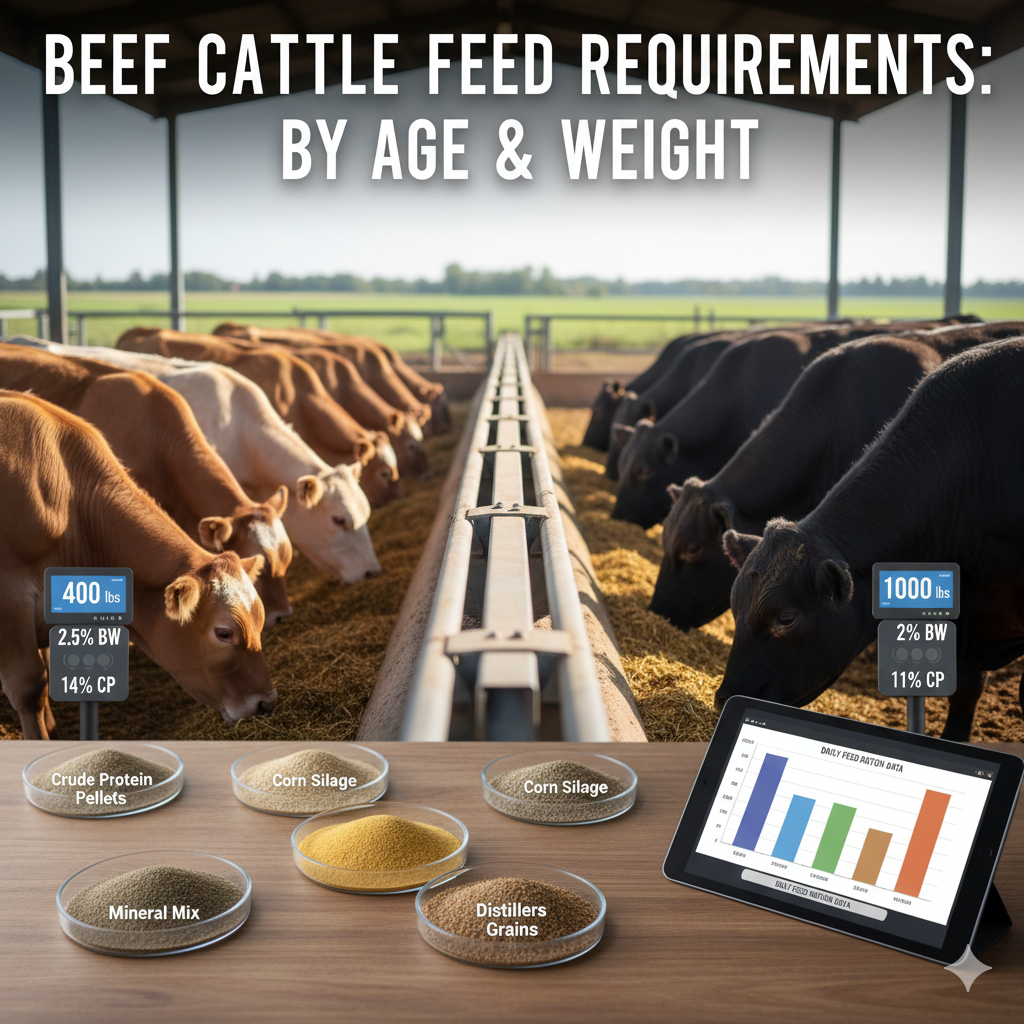
Beef and Cattle Feed Requirements by Age and Weight:
. Feeding your cattle according to age and weight ensures faster growth, better feed efficiency, and higher profits. Many farmers struggle with underfeeding, overfeeding, or using an imbalanced diet — this guide will help you calculate exact feed requirements for every stage of a beef cattle’s life.
Factors Affecting Beef Cattle Feed Requirements
Several factors influence how much feed your cattle need:
- Age & Growth Stage – Calves, weaners, yearlings, and adult cattle all have different energy and protein needs.
- Weight & Body Condition – Nutritional requirements scale with size; heavier cattle need more feed.
- Breed & Genetics – Fast-growing breeds like Angus or Hereford have higher energy requirements.
- Environment & Management – Climate, housing, and pasture quality can impact feed intake and nutrient absorption.
Nutritional Components of Beef Cattle Feed
A balanced feed contains energy, protein, fiber, vitamins, and minerals:
| Component | Role in Cattle Diet | Common Sources |
|---|---|---|
| Energy | Supports growth and weight gain | Grains (corn, barley), fats |
| Protein | Builds muscle, supports metabolism | Soybean meal, alfalfa, cottonseed meal |
| Fiber & Roughage | Maintains digestive health | Hay, silage, pasture |
| Vitamins & Minerals | Bone growth, immunity, reproduction | Calcium, phosphorus, salt, trace minerals |
Feed Requirements by Age
Calves (0–6 Months)
- Milk Feeding: 6–8 liters/day (milk or replacer)
- Creep Feed: Introduce gradually to supplement growth
- Focus on protein-rich feeds for muscle development
Keywords: creep feed for calves, milk replacer for beef calves
Weaners (6–12 Months)
- Shift to solid feeds completely
- Protein: 16–18% of total feed
- Daily intake: ~2–3% of body weight
Keywords: weaned beef calf feed, feed for fast growth
Yearlings (12–18 Months)
- Energy intake must support continued growth
- Protein: 14–16% for lean muscle gain
- Adjust feed for desired weight gain (0.8–1.2 kg/day)
Keywords: yearling cattle feed, protein-rich feed for growth
Adults (18+ Months)
- Maintenance Diet: 1.5–2% of body weight for non-breeding adults
- Finishing Diet: High-energy concentrate for feedlot beef
- Protein: 12–14%
Keywords: finishing beef feed, adult cattle feed requirements
Feed Requirements by Weight
Feed intake depends on body weight and feed conversion ratio (FCR):
| Body Weight | Daily Feed Requirement (kg) | Notes |
|---|---|---|
| 100 kg | 2–3 kg | Growing calf |
| 200 kg | 4–6 kg | Weaner stage |
| 300 kg | 6–8 kg | Yearling |
| 400 kg | 8–10 kg | Adult maintenance |
| 500 kg | 10–12 kg | Feedlot finishing |
Types of Feed for Beef Cattle
- Forages: Hay, silage, pasture – primary source of fiber
- Concentrates: Grains, protein meals – high energy and protein
- Supplements: Minerals, vitamins, additives – prevent deficiencies
Pro Tip: Combine roughage and concentrates to optimize growth without digestive issues.
Formulating a Balanced Diet
Step-by-step example for a 200 kg weaner:
- Calculate daily energy requirement: 2.5% of body weight = 5 kg feed
- Protein allocation: 16% of 5 kg = 0.8 kg protein
- Roughage vs. concentrate: 60% roughage, 40% concentrate
This ensures balanced growth, efficient FCR, and healthy weight gain.
Common Feeding Mistakes to Avoid
- Overfeeding or underfeeding – leads to obesity or stunted growth
- Imbalanced nutrition – too much energy, not enough protein or minerals
- Poor quality forage – reduces feed intake and health
Tips for Efficient Feeding Management
- Schedule feed times consistently
- Use rotational grazing to maximize pasture efficiency
- Incorporate feed additives for growth and immunity
- Monitor body condition score to adjust feed
Summary
Feeding beef cattle according to age and weight is critical for optimal growth, health, and profitability. Using this guide, farmers can calculate daily feed requirements, formulate balanced diets, and avoid common feeding mistakes. Proper nutrition translates to faster weight gain, healthier cattle, and higher-quality beef — making age- and weight-based feeding an essential practice on every farm.