
I. Introduction
Hey there! If you’re raising cattle, you already know that feed is more than just something to fill their stomachs—it’s the fuel that drives growth, milk production, and overall health. Proper cattle feed nutrition isn’t just important; it’s the difference between thriving livestock and underperforming animals.
Thank you for reading. Don't forget to subscribe & share!
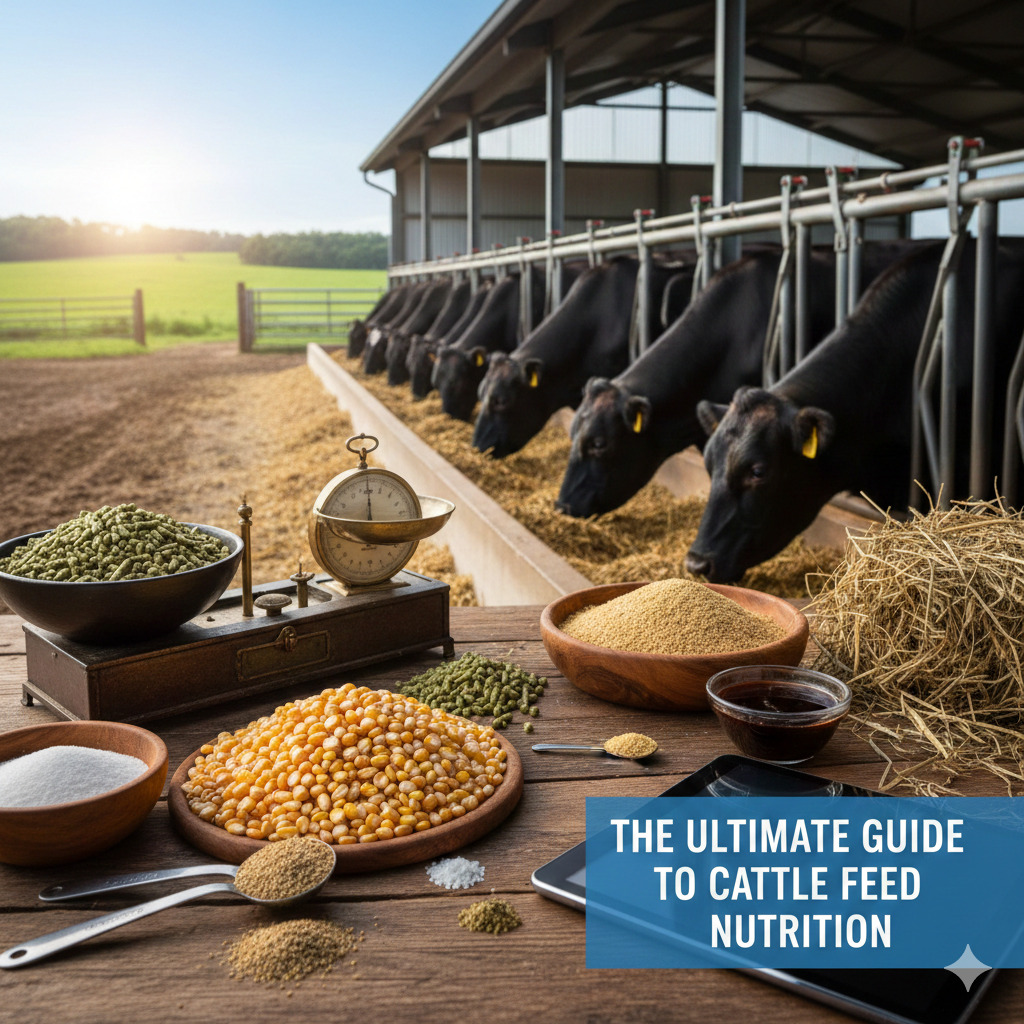
In this ultimate guide, we’ll break down everything you need to know: from nutrient requirements and types of feed to ration balancing, special nutrition needs, and feed efficiency tips. By the end, you’ll have a clear roadmap to feeding healthy, productive cattle.
II. Understanding Cattle Nutrient Requirements
Animals, like humans, need a balanced diet. Let’s look at the essential nutrients cows need to thrive.
A. Protein
Protein is the building block for muscles, milk, and reproduction. Without enough protein, cattle may grow slowly, produce less milk, and have reproductive issues.
- Sources: Soybean meal, cottonseed meal, legumes
- Tips: Adjust protein levels based on age, production stage, and breed
B. Carbohydrates
Carbohydrates are the primary energy source for cattle. They help maintain body functions, growth, and lactation.
- High-digestibility carbs like grains are best for milk-producing cows.
- Overfeeding can cause acidosis, so balance is key.
C. Fats
Though small in quantity, fats are a concentrated energy source. They also help increase milk fat content.
- Feed sources: Oilseeds, vegetable oils, by-products
- Avoid excessive fat, as it can reduce fiber digestion
D. Vitamins and Minerals
Vitamins and minerals are vital for bone health, immunity, and reproduction. Key nutrients include:
- Vitamins: A, D, E
- Minerals: Calcium, phosphorus, magnesium
Tip: Use mineral supplements to prevent deficiencies, especially during high-production phases.
III. Types of Cattle Feed
Cattle feed is typically categorized into forages, concentrates, and supplements. Each type plays a specific role in health and productivity.
A. Forages
Forages provide fiber, which is crucial for rumen health and digestion.
- Examples: Hay, silage, green fodder
- Benefits: Maintains healthy rumen microbes, supports chewing, and prevents digestive disorders
B. Concentrates
Concentrates are energy-dense feeds that include grains, oilseeds, and by-products. They are especially important for lactating and growing cattle.
C. Feed Supplements
Supplements improve nutrient absorption and digestion. Common examples include:
- Vitamins and mineral mixtures
- Probiotics and enzymes
- Feed additives for energy and protein balance
IV. Feed Formulation and Ration Balancing
Balanced feeding ensures that cattle get the right combination of protein, energy, fiber, vitamins, and minerals.
- Roughage vs. concentrates: Ruminants need a high fiber intake for rumen health, while concentrates provide energy and protein.
- Total Mixed Ration (TMR): A scientifically formulated feed mix that provides all nutrients in every bite.
V. Special Nutrition Needs
Different groups of cattle have unique nutrient requirements.
A. Growing Calves
Young animals need protein-rich diets for healthy growth. Starter feeds and proper weaning strategies are essential.
B. Lactating Cows
High-producing cows require energy-dense diets to support milk production. Balance protein, carbohydrates, and minerals for optimal yield.
C. Pregnant Cows
Pregnant cows need adequate nutrients for fetal development. Overfeeding or underfeeding can cause complications.
Common Nutritional Disorders in Cattle
Even with good management, poor nutrition can lead to disorders:
- Protein deficiency: Slow growth, low milk yield
- Mineral deficiency: Weak bones, poor reproduction
- Overfeeding: Acidosis, bloat
- Symptoms & Prevention: Monitor feed intake, provide supplements, and balance rations
Tips to Improve Cattle Feed Efficiency
Want to get the most out of your feed? Try these tips:
- Proper storage: Protect feed from moisture and mold
- Regular feed testing: Ensure nutrient content matches requirements
- Probiotics & enzymes: Improve digestion and absorption
- Monitor feed conversion ratio (FCR): Track growth or milk output per unit of feed
Benefits of Optimized Cattle Nutrition
Optimized nutrition results in:
- Better growth, milk, and meat production
- Healthier animals with stronger immune systems
- Reduced feed costs and waste
- Improved profitability for farmers
Conclusion
Feeding cattle is more than just filling their stomachs—it’s about providing a balanced, nutrient-rich diet for maximum productivity. From forages and concentrates to supplements and ration balancing, every aspect matters.
By applying the strategies in this guide, you can ensure healthy, productive, and profitable cattle all year round.