
1. Introduction
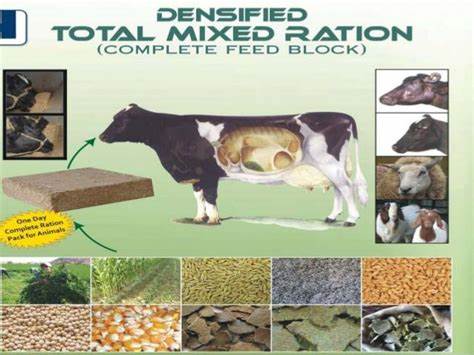
Total Mixed Ration (TMR) is a feeding method where all the feed ingredients—forages, concentrates, minerals, vitamins, and feed additives—are thoroughly mixed into a homogenous blend. This mixed ration is fed to dairy or beef cattle to provide complete, balanced nutrition in every bite.
Thank you for reading. Don't forget to subscribe & share!
TMR is increasingly used in commercial livestock production systems due to its efficiency in improving milk yield, animal health, and feed utilization.
2. Objectives of TMR Feeding
- Deliver a balanced diet with every mouthful to prevent selective feeding.
- Maximize dry matter intake (DMI).
- Improve milk yield and quality.
- Enhance rumen function and microbial efficiency.
- Minimize digestive disturbances (e.g., acidosis, bloat).
- Reduce feed wastage and labor.
3. Components of a Total Mixed Ration
A balanced TMR contains the following components:
| Component | Examples | Function |
|---|---|---|
| Forages | Silage, hay, pasture, crop residues | Source of fiber, maintains rumen health |
| Concentrates | Grains (maize, barley), oilseed cakes | Provide energy and protein |
| Protein sources | Soybean meal, cottonseed meal | Supports growth, milk production |
| Minerals | Dicalcium phosphate, salt mix | Bone health, enzyme functions |
| Vitamins | A, D, E, B-complex | Immunity, reproduction, metabolism |
| Additives | Buffers, probiotics, enzymes, ionophores | Improve digestion and feed efficiency |
| Water | Clean, fresh water always available | Essential for metabolism and milk |
4. Steps in Preparing TMR
- Formulate the ration based on:
- Animal category (e.g., high-yielding lactating cows, dry cows, heifers)
- Nutritional requirements (CP, TDN, minerals, vitamins)
- Locally available feed resources
- Weigh ingredients accurately.
- Chop long-stem forages to 1–3 cm length for uniform mixing.
- Use a feed mixer wagon or machine to blend the ingredients thoroughly.
- Distribute the TMR to feed bunks or troughs—usually twice daily.
5. Nutritional Composition of an Ideal TMR for Dairy Cows
| Nutrient | Requirement (Lactating Cow) |
|---|---|
| Crude Protein (CP) | 16–18% of DM |
| Total Digestible Nutrients (TDN) | 65–72% of DM |
| Net Energy for Lactation (NEL) | 1.6–1.7 Mcal/kg of DM |
| Neutral Detergent Fiber (NDF) | 30–35% of DM |
| Non-Fiber Carbohydrates (NFC) | 35–40% of DM |
| Dry Matter Intake (DMI) | 3–4% of body weight per day |
Note: Adjustments needed based on milk yield, lactation stage, breed, and environment.
6. Types of TMR
- High-forage TMR: Used for dry cows, low-yielding cows, and heifers.
- Balanced TMR: Used for lactating cows—optimized for milk production.
- High-energy TMR: For high-yielding cows in early lactation.
7. Advantages of TMR Feeding
| Benefit | Explanation |
|---|---|
| Balanced nutrient intake | Prevents over- or under-consumption of specific nutrients |
| Reduced feed sorting | Ensures uniform intake of all diet components |
| Improved rumen function | Stable rumen pH due to balanced fiber and starch |
| Higher dry matter intake | Promotes more consistent and higher feed consumption |
| Better milk yield and composition | Enhances milk fat and protein content |
| Labor and time efficient | One-step feeding process reduces manpower requirement |
| Less feed wastage | Properly mixed rations reduce rejection and spoilage |
| Facilitates feed cost control | Allows incorporation of cost-effective byproducts (e.g., molasses, brewery waste) |
8. Challenges and Limitations of TMR
| Challenge | Mitigation Strategy |
|---|---|
| Requires capital investment | Government or NGO support, leasing equipment |
| Needs trained staff | Provide technical training in feed formulation and machine use |
| Improper mixing affects intake | Use calibrated mixers and follow mixing order |
| Heat or moisture damage | Use fresh ingredients, manage storage, use preservatives in silage |
| Not ideal for smallholder farms | Use mini-TMR systems or cooperative mixing units |
9. Monitoring and Management
To ensure the effectiveness of TMR feeding:
- Monitor milk yield and composition regularly.
- Check body condition scores (BCS).
- Observe feeding behavior and bunk cleanliness.
- Adjust formulation as per forage analysis or seasonal variation.
- Regularly service mixers and weighing systems.
10. TMR in Tropical and Subtropical Regions
TMR is adaptable to tropical countries using local ingredients like:
- Silage from sorghum, maize, or Napier grass
- Agro-industrial byproducts: rice bran, cottonseed cake, wheat bran
- Crop residues: treated wheat straw, sugarcane tops
Use of urea-molasses treatment, ensiling, and pelletized feed blocks can help improve feed quality and simplify TMR preparation.
11. Conclusion
TMR feeding is a scientific, efficient, and performance-driven system that enhances productivity in commercial dairy farming. When properly formulated and managed, it supports:
- Optimal animal health
- Higher milk yield
- Better feed efficiency
- Reduced labor costs
Despite its challenges, especially in low-resource settings, TMR can be adapted using local feed resources and cooperative models, making it a transformative tool for modern dairy enterprises.